

When Place Meets Action: What QR Codes Bring to Place-Based OOH
Out-of-home advertising excels at reaching people in the real world at scale—connecting in moments when their attention isn't buried in a digital feed. With QR codes layered on top, OOH goes a step further: seamlessly proving and capturing what happens next. Recent campaigns run across UB Media’s residential and restobar environments demonstrate why this pairing is so powerful.
Place-based OOH is having a moment in Canada
The timing couldn't be better. According to COMMB (the Canadian Out-of-Home Marketing and Measurement Bureau), Canada's OOH market grew 5.8% year-over-year in 2025, outpacing broader advertising-market projections by 30%. Digital OOH led that trajectory at 11.5%, now representing 58% of total OOH revenue—up from 55% the previous year.
Behind those numbers is a clear, ongoing consumer movement: Canadians are active and out of their homes. COMMB reports that spending on entertainment, dining, concerts, and sporting events rose over 10% in 2025, accounting for roughly 17% of total consumer expenditure. That activity drives continuous foot traffic directly through the residential hubs, entertainment districts, and hospitality venues where place-based OOH lives.
Why QR codes belong on the board
While OOH builds massive real-world awareness, QR codes turn those static or digital placements into measurable, single-tap gateways. Viewers go directly from a physical space to a landing page, special offer, or conversion funnel—with zero friction, as modern smartphone camera apps feature built-in scanning functionality.
Two data points make the case for pairing rather than choosing:
Nielsen research cited by COMMB shows OOH is the most effective medium at driving online activity, delivering more online action per ad dollar than television, radio or print. A QR code is the mechanism that captures that activity and makes it countable.
COMMB's Out-of-Home in the Media Mix study of over 1,500 Canadians found that combining OOH with online channels markedly increases campaign effectiveness, partly by letting brands retarget people first reached in the physical world. It also notes OOH resonates strongly with 18–34s (the same audience most comfortable scanning a code).
Place-based inventory is especially suited to this. In a lobby, elevator or restobar, dwell time is longer and the setting calmer than a roadside drive-by, giving people the seconds they need to actually lift a phone and scan.
What we saw in-market
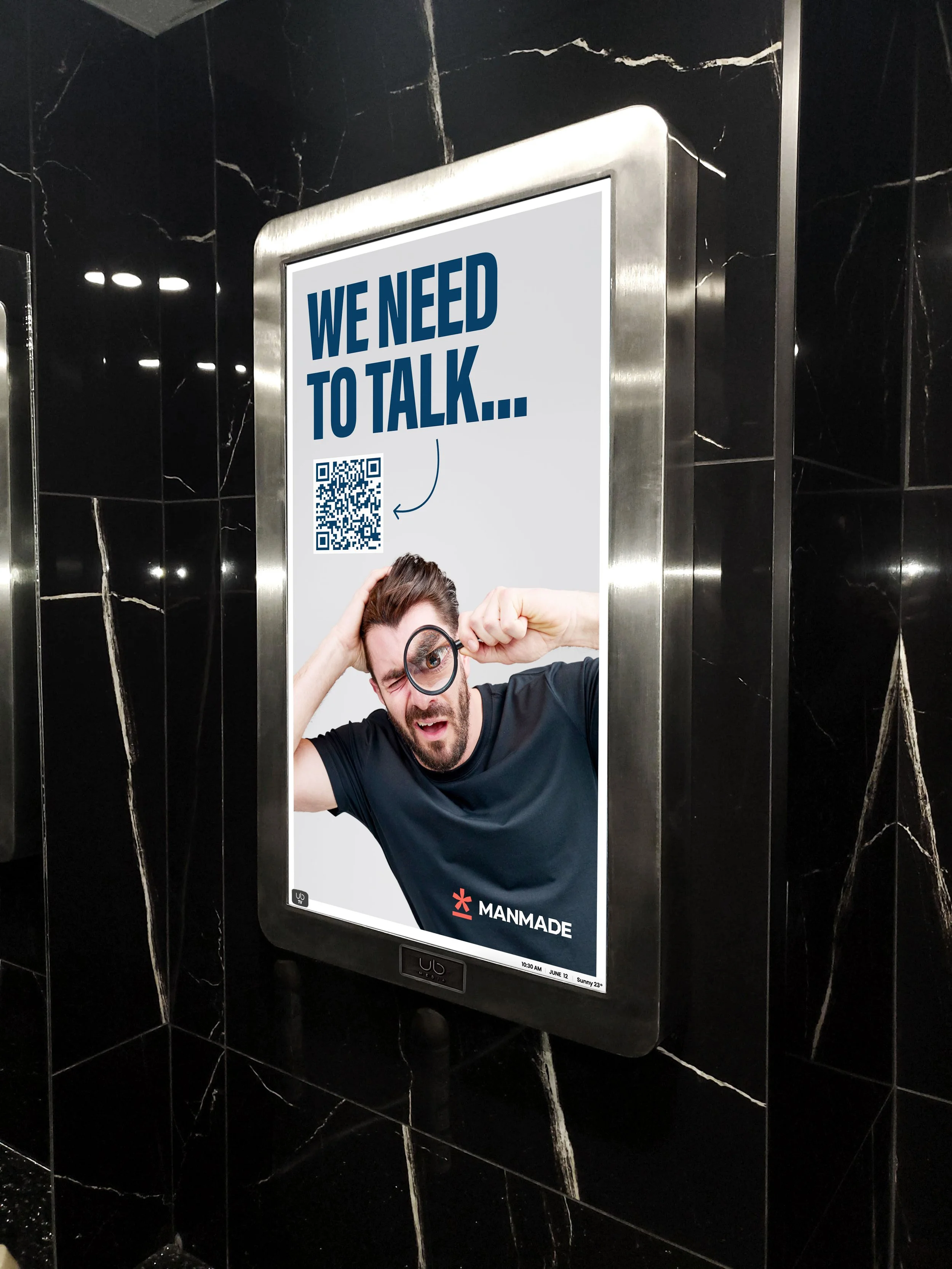
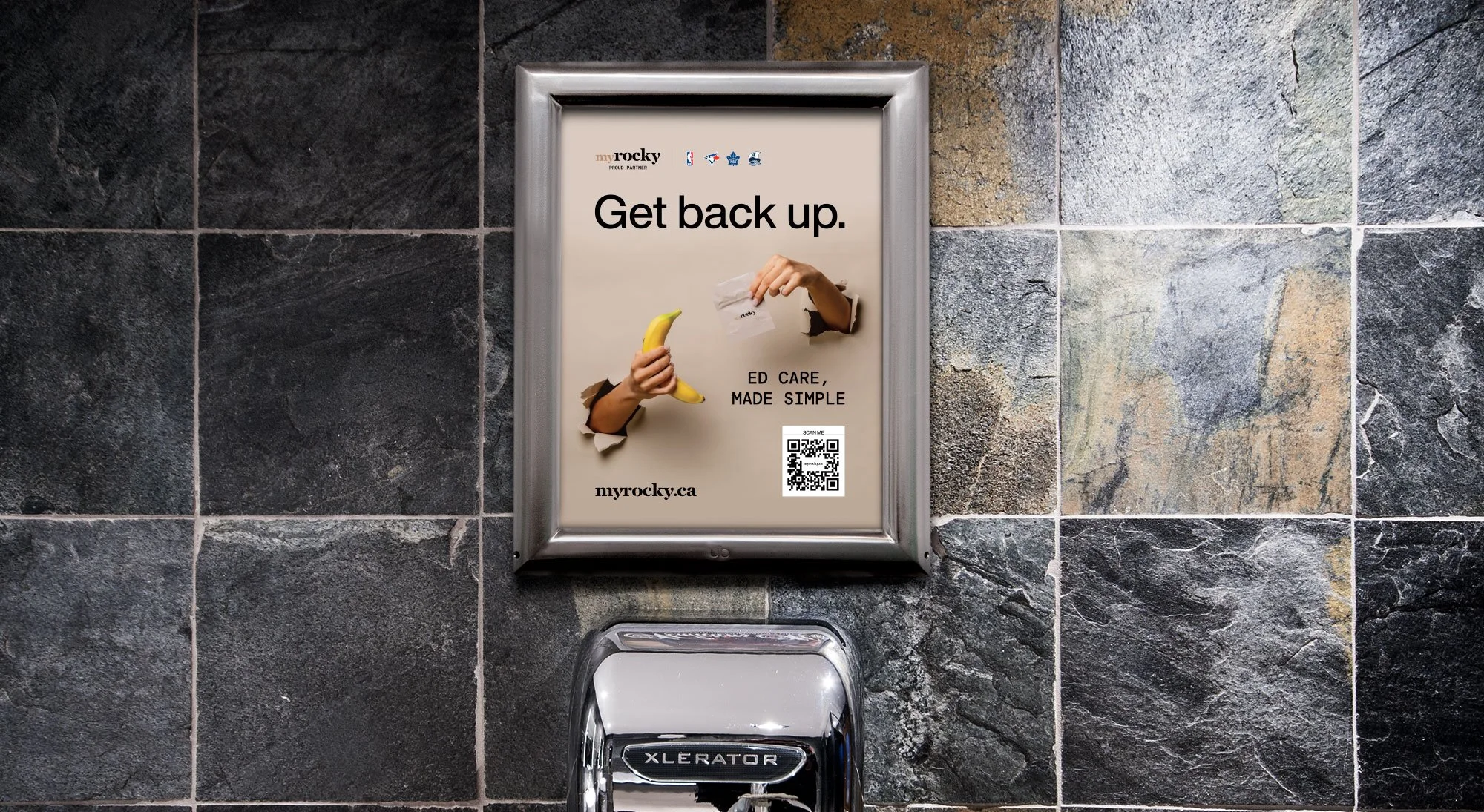
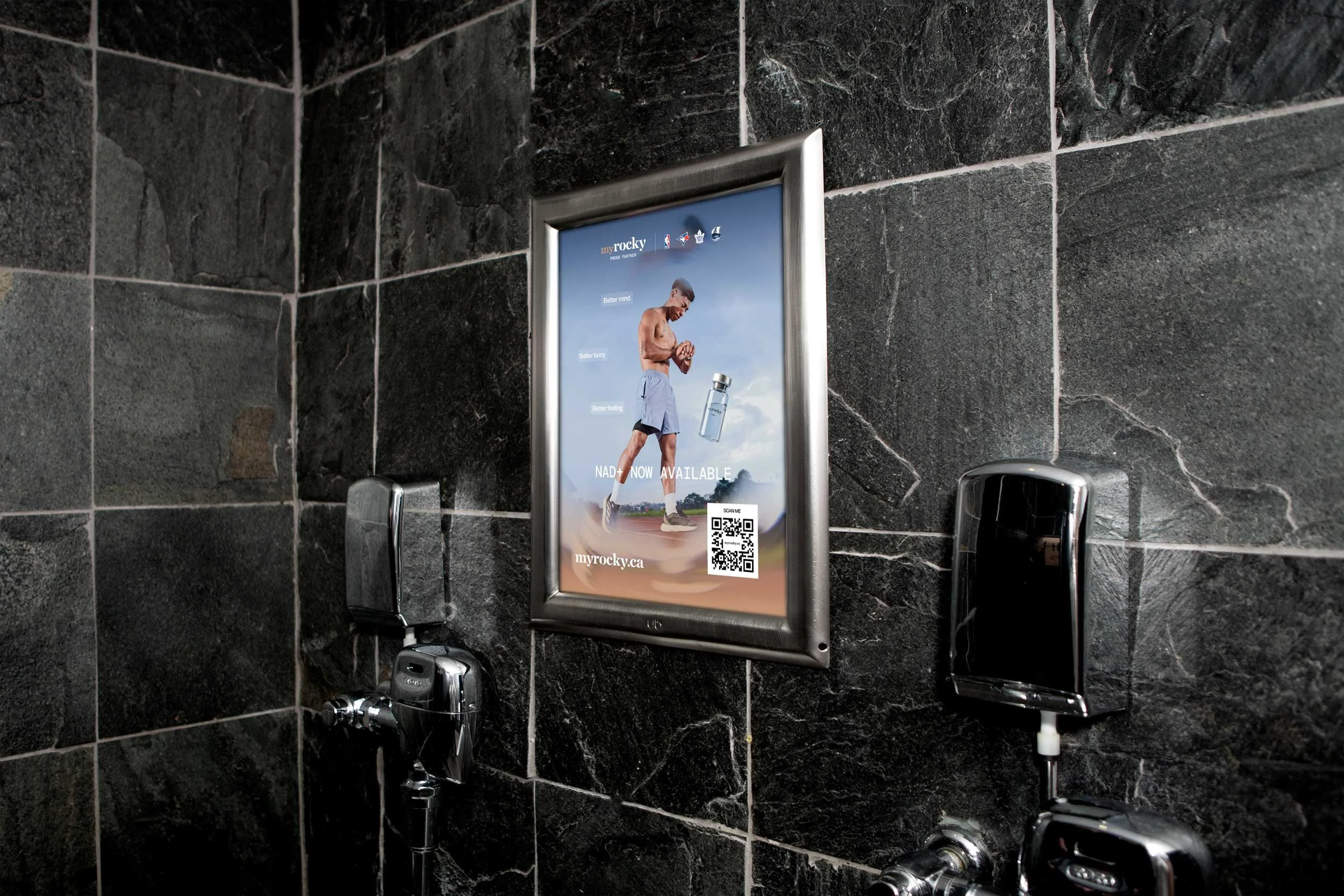
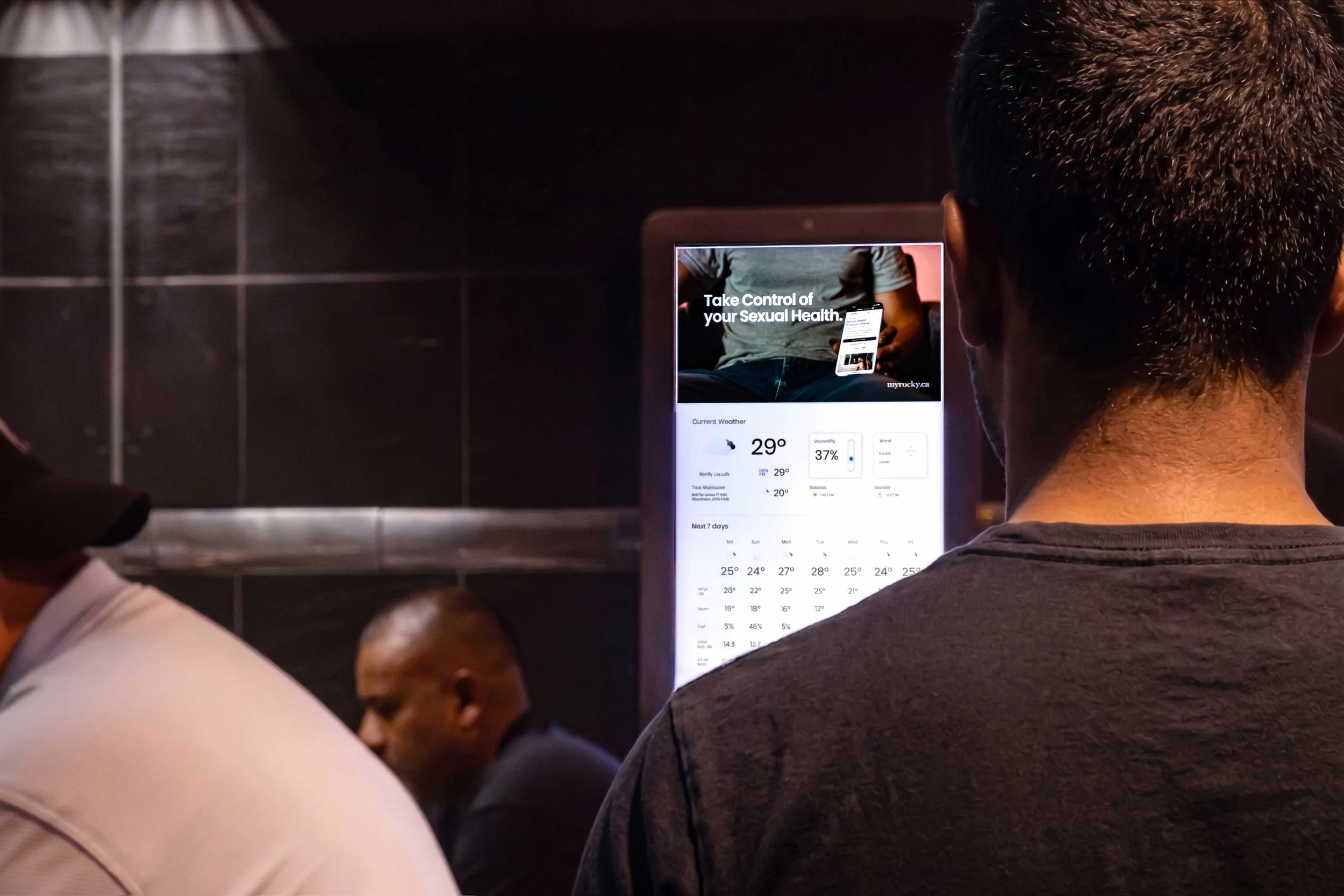
For a recent MyRocky campaign, UB Media ran QR-enabled static creative across residential and restobar placements in the Greater Toronto Area along with full motion video commercials on our digital boards. A few takeaways stood out; and they're instructive for any brand weighing QR in a place-based buy:
Momentum builds. Scan volume didn't just hold steady; it climbed week over week through the flight, roughly tripling from launch to its peak. Place-based QR rewards a sustained presence, not a one-week burst.
The audience was genuinely local. The overwhelming majority of engagement came from within Canada, and half from the GTA core specifically. For a brand that cares about reaching a real, in-market local audience, the scans confirmed the placements were landing where they were meant to.
Physical drove the digital action. Because the QR code lived only on the static creative, every scan is a clean signal that a physical, real-world placement moved someone to act, not a digital impression they were already primed to click.
Know your device audience. Scans skewed heavily toward iOS, a useful planning input for anything that happens after the scan, from landing-page design to app or wallet integration.
The through-line: place-based placements don't just build awareness — with a QR layer, they generate measurable, trackable, and local engagement you can learn from.
The takeaway for brands
QR codes don't replace what OOH already does well; they document it. In a place-based setting (where audiences are dwelling, receptive, and physically present) a code turns a moment of attention into a first-party data point and a direct path to conversion.
For brands that want the reach of the real world and the accountability of digital, the combination is hard to beat.
Sources
1. Canadian Out-of-Home Marketing and Measurement Bureau (COMMB), "First-Ever Canadian Out-of-Home Industry Revenue Reporting," February 2026 — OOH market growth (5.8% YoY), digital OOH growth (11.5%), and digital's 58% revenue share. https://oohtoday.com/commb-releases-first-ever-canadian-out-of-home-industry-revenue-reporting/
2. COMMB revenue benchmarking report coverage, Media in Canada, February 24, 2026 — place-based and format-level revenue detail. https://mediaincanada.com/2026/02/24/commb-first-ooh-benchmarkreport/
3. COMMB, "Out-of-Home in the Media Mix" report — survey of 1,500+ Canadians on OOH effectiveness in combination with online channels and resonance with 18–34 audiences. https://commb.ca/en-ca/resources/
4. Nielsen study (via COMMB Resource Centre) — OOH as the most effective medium for driving online activity per ad dollar. https://commb.ca/en-ca/resources/
5. COMMB Resource Centre — place-based consumer action data (75% of consumers take action after seeing a place-based ad). https://commb.ca/en-ca/resources/